|
|
|
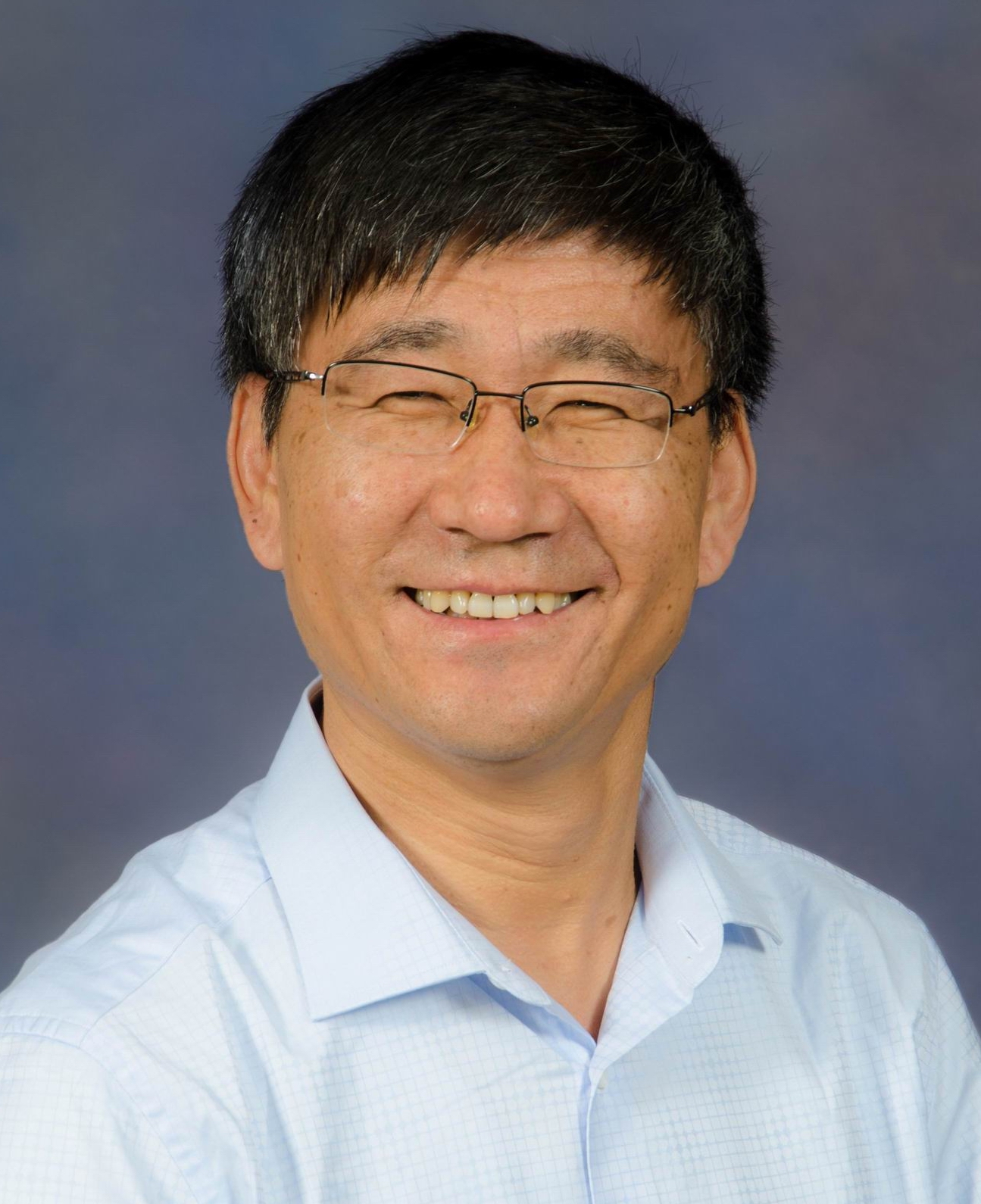 |
Yuguang "Michael"
Fang
ACM Fellow, IEEE Fellow,
AAAS Fellow
Hong Kong Global STEM Scholar and Chair
Professor of Internet of Things
Director,
Hong
Kong JC STEM Lab of Smart City
Department of
Computer Science, City University of Hong
Kong
|
Title:
Mobility Brings Opportunities: Mobilize In-Network Resources for
Smart Cities and Low Altitude Economy
Abstract:
Smart city is envisioned to provide its
residents with a rich set of smart services such as smart mobility,
smart health/aging, and public safety, while low altitude economy is
to overcome the terrain constraints to provide complementary or
better services by leveraging over-the-air advantage. However, all
these life-sustaining and value-added services will not be possible
without effective support of sufficient right-on-spot and
right-on-time resources for sensing, communications, computing,
storage, and intelligence (SCCSI), and the current state-of-the-art
infrastructure does not support well for such service provisioning.
In this talk, the speaker will offer an envisioned design to enable
SCCSI capabilities by leverage mobile things to “get” in-network
resources closer to where and when they are needed to fulfill
ultimate service missions.
Biography:
Dr. Yuguang “Michael” Fang received an MS
degree in Mathematics from Qufu Normal University, Shandong, China
in 1987, a PhD degree in Systems, Control and Industrial Engineering
from Case Western Reserve University in 1994, and a PhD degree in
Electrical and Computer Systems from Boston University in 1997. He
joined the Department of Electrical and Computer Engineering at
University of Florida in 2000 as an assistant professor, then was
promoted to associate professor in 2003, full professor in 2005, and
distinguished professor in 2019, respectively. Since August 2022, he
has been a Hong Kong Global STEM Scholar and the Chair Professor of
Internet of Things with the Department of Computer Science at
City University of Hong Kong, where he is also the founding Director
of Hong Kong JC STEM Lab of Smart City. Dr. Fang received many
awards, including the US NSF CAREER Award, US ONR Young Investigator
Award, 2018 IEEE Vehicular TechnologyOutstanding Service Award, IEEE
Communications Society AHSN Technical Achievement Award (2019),
CISTC Technical Recognition Award (2015), and WTC Recognition Award
(2014). He served as the Editor-in-Chief of IEEE Transactions on
Vehicular Technology (2013-2017) and IEEE Wireless Communications
(2009-2012), and serves/served on several editorial boards of
journals, including Proceedings of the IEEE (2018-present) and ACM
Computing Surveys (2017-present). He served as the Technical Program
Co-Chair of IEEE INFOCOM’2014. He has actively engaged with his
professional community, serving as a Member-at-Large of the Board of
Governors of IEEE Communications Society (2022-2024) and the
Director of Magazines of IEEE Communications Society (2018-2019). He
is a fellow of ACM, IEEE, and AAAS.
|
|
 |
Rajiv
Ranjan
MAE, FIEEE, FAAIA,
FAIIA, MNAAI
University Chair Professor in the School
of Computing of Newcastle University, United
Kingdom
|
Title: At the Edge of
Intelligence: Osmotic Meta-Learning in the IoT–AI
Continuum
Abstract:
As the Internet of Things (IoT)
continues to weave itself into every aspect of our built and
natural environments, it generates vast, dynamic streams of data
with the potential to reshape critical sectors—from healthcare
and agriculture to smart cities, energy systems, and disaster
management. In parallel, advances in Artificial Intelligence
(AI)—notably in Distributed and Deep Learning—are enabling new
forms of perception, prediction, and decision-making from these
heterogeneous data sources.
Yet a persistent challenge
remains:
most deep learning architectures depend on centralized data
aggregation and high-performance computation in the cloud. This
model often introduces latency, bandwidth inefficiencies, and
privacy risks—factors that constrain real-time, context-aware
intelligence at the network’s edge.
Emerging paradigms such
as
Osmotic Computing suggest a new way forward, envisioning
computation that fluidly migrates across cloud, edge, and device
layers according to context and resource availability. However,
orchestrating and scaling distributed AI across this IoT– AI
continuum demands new learning strategies that are inherently
adaptive, resource-aware, and sensitive to data locality.
This
keynote introduces Osmotic Meta-Learning—a framework for
developing self-adaptive learning systems capable of operating
seamlessly within globally distributed, heterogeneous
environments. It will explore:
1. The foundational
principles of
Osmotic Computing and their implications for the evolution of
ambient and edge intelligence;
2. Core research and
programming
challenges in coordinating distributed learning workflows that
respond to fluctuating resources and contextual dynamics;
3. A novel approach to training deep learning models across
thousands of mid-scale IoT and edge devices—minimizing reliance
on traditional GPU-centric cloud infrastructures;
4. Early findings from deployments within the UK’s Urban
Observatory—a large-scale, real-world testbed demonstrating the
feasibility of osmotic AI systems at city scale.
Biography:
Professor Rajiv Ranjan is an
Australian-British computer scientist, of Indian origin, known
for his research in Distributed Systems (Cloud Computing, Big
Data, and the Internet of Things). He is University Chair
Professor for the Internet of Things research in the School of
Computing of Newcastle University, United Kingdom.
He is an internationally established scientist in the area of
Distributed Systems (having published about 350 scientific
papers). He is a fellow of IEEE (2024), Academia Europaea (2022)
and the Asia-Pacific Artificial Intelligence Association (2023).
He is also the Founding Director of the International Centre
(UK-Australia) on the EV Security and National Edge Artificial
Intelligence Hub, both funded by EPSRC. He has secured more than
$68 Million AUD (£34 Million+ GBP) in the form of competitive
research grants from both public and private agencies. He is an
innovator with strong and sustained academic and industrial
impact and a globally recognized R&D leader with a proven track
record. He serves on the editorial boards of top quality
international journals including IEEE Transactions on Computers
(2014-2016), IEEE Transactions on Cloud Computing, ACM
Transactions on the Internet of Things, The Computer (Oxford
University), and The Computing (Springer) and Future Generation
Computer Systems. He led the Blue Skies section (department,
2014-2019) of IEEE Cloud Computing, where his principal role was
to identify and write about the most important, cutting-edge
research issues at the intersection of multiple, inter-dependent
research disciplines within distributed systems research area
including Internet of Things, Big Data Analytics, Cloud
Computing, and Edge Computing. He is one of the highly cited
authors in computer science and software engineering worldwide
(h-index=83+, g-index=290+, and 34000+ google scholar citations,
h-index=65+ and 19000+ Scopus citations, and h-index=50+ and
12000+ Web of Science citations).
|
|
 |
Dusit
Niyato
IEEE Fellow, IET
Fellow
College of Computing and Data Science
(CCDS)
,
Nanyang Technological
University
|
Title: Toward Edge General
Intelligence with Agentic AI and Agentification
Abstract:
The rapid expansion of
sixth-generation (6G) wireless networks and the Internet of
Things (IoT) has catalyzed the evolution from centralized
cloud intelligence towards decentralized edge general
intelligence. However, traditional edge intelligence
methods, characterized by static models and limited
cognitive autonomy, fail to address the dynamic,
heterogeneous, and resource-constrained scenarios inherent
to emerging edge networks. Agentic artificial intelligence
(Agentic AI) emerges as a transformative solution, enabling
edge systems to autonomously perceive multimodal
environments, reason contextually, and adapt proactively
through continuous perception-reasoning-action loops. In
this context, the agentification of edge intelligence serves
as a key paradigm shift, where distributed entities evolve
into autonomous agents capable of collaboration and
continual adaptation. This paper presents a comprehensive
survey dedicated to Agentic AI and agentification frameworks
tailored explicitly for edge general intelligence. First, we
systematically introduce foundational concepts and clarify
distinctions from traditional edge intelligence paradigms.
Second, we analyze important enabling technologies,
including compact model compression, energy-aware computing
strategies, robust connectivity frameworks, and advanced
knowledge representation and reasoning mechanisms. Third, we
provide representative case studies demonstrating Agentic
AI's capabilities in low-altitude economy networks and
intent-driven networking. Furthermore, we identify current
research challenges.
Biography:
Dusit Niyato is currently a
President's Chair Professor in the College of Computing &
Data Science (CCDS), Nanyang Technological University,
Singapore. Dusit's research interests are in the areas of
mobile generative AI, edge intelligence, quantum computing
and networking, and incentive mechanism design. Currently,
Dusit is serving as Editor-in-Chief of IEEE Transactions on
Network Science and Engineering (impact factor 7.9). He is
also the past Editor-in-Chief and current area editor of
IEEE Communications Surveys and Tutorials (impact factor
46.7), the area editor of IEEE Transactions on Vehicular
Technology, area editor of IEEE Transactions on
Communications, topical editor of IEEE Internet of Things
Journal, lead series editor of IEEE Communications Magazine,
topic editor of IEEE Transactions on Services Computing, and
associate editor of IEEE Transactions on Wireless
Communications,. Dusit is the Members-at-Large to the Board
of Governors of IEEE Communications Society for 2024-2026.
He is a Fellow of IEEE and a Fellow of IET.
|
|
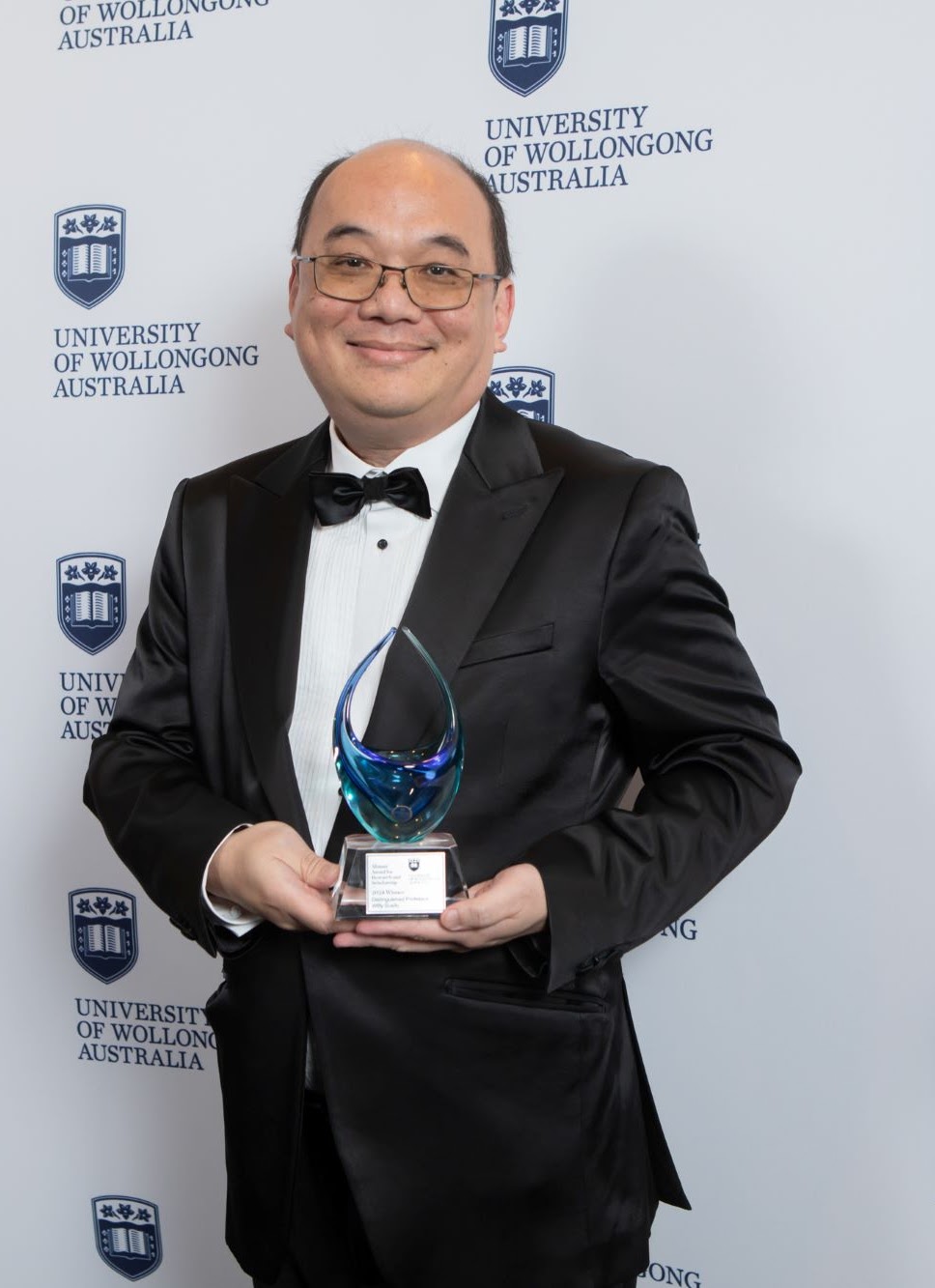 |
Willy
Susilo
IEEE Fellow,
IET Fellow, ACS Fellow, AAIA Fellow,
AIIA Fellow
School of Computing and
Information Technology
,
University of
Wollongong
|
Title: Cloud Computing
Security
Abstract:
Cloud computing is considered as
one
of the most prominent paradigms in the information
technology industry, since it can significantly reduce
the
costs of hardware and software resources in computing
infrastructure. This convenience has enabled
corporations to
efficiently use cloud storage as a mechanism to share
data
and cloud computing as a mechanism to outsource
computing.
One of the most important works in the area of cloud
computing is how to provide security protections. This
talk
will explore the recent development and the future
direction
in this area.
Biography:
Willy Susilo is a Distinguished
Professor at the School of Computing and Information
Technology, Faculty of Engineering and Information
Sciences
at the University of Wollongong (UOW), Australia.
He holds the most prestigious Australian Laureate
Fellowship
awarded by the Australian Research Council. He is the
director of Institute of Cybersecurity and Cryptology,
School of Computing and Information Technology, UOW.
Recently, he was awarded the 2024 NSW Premier's Prizes
for
Science and Engineering due to his research work. He is
an
IEEE Fellow, an IET Fellow, an ACS Fellow, an AAIA
Fellow
and an AIIA Fellow. Previously, he was awarded the
prestigious Australian Research Council Future
Fellowship in
2009. He has published more than 500 papers in journals
and
conference proceedings in cryptography and network
security.
He is the Editor-in-Chief of the Information journal and
the
Special Content Editor of the Elsevier’s Computer
Standards
and Interfaces. He is also serving as an Associate
Editors
in several international journals, including IEEE
Transactions. He has also served as the program
committee
member of several international conferences.
|
|
|
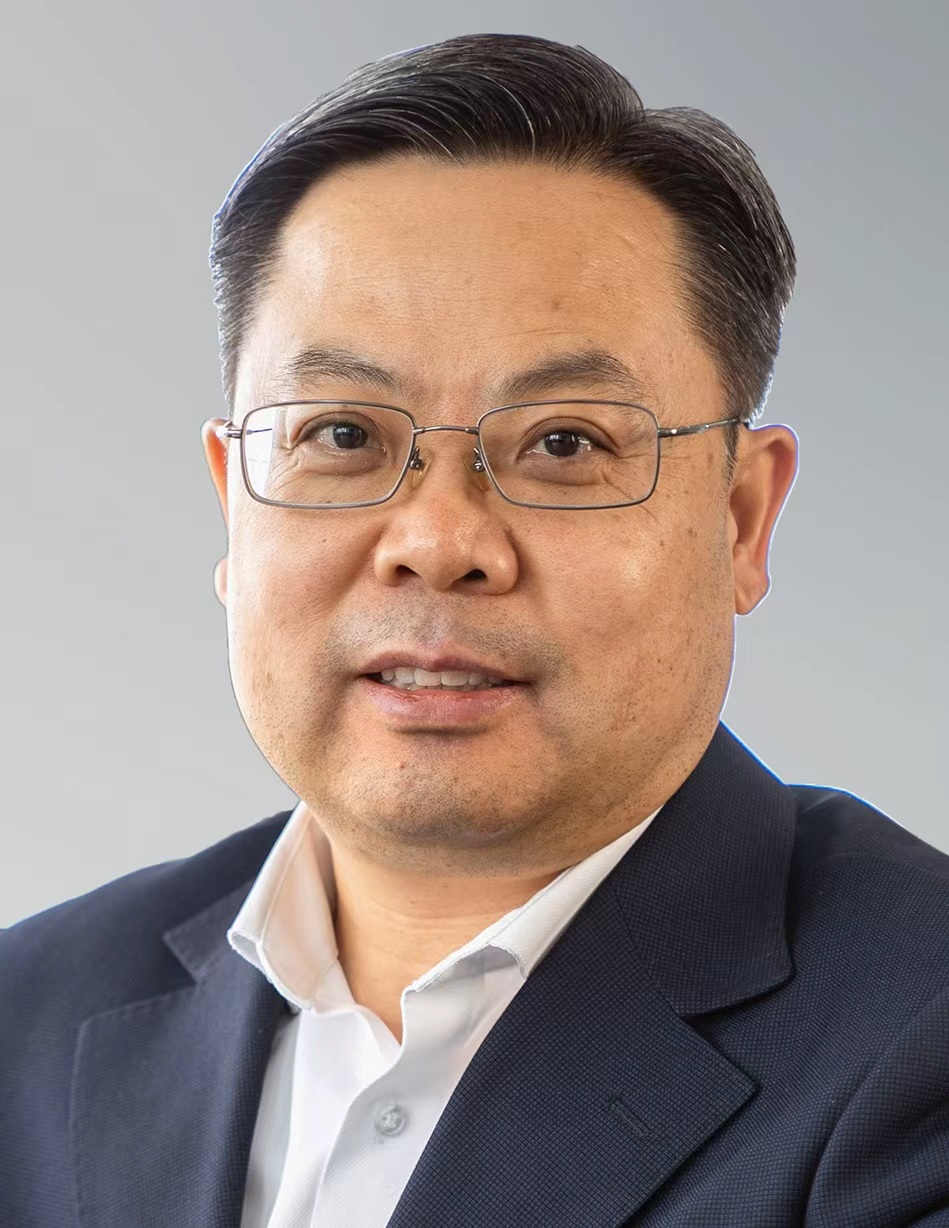
Xianbin
Wang
CAE
Fellow,
EIC Fellow, IEEE Fellow
Tier-1 Canada Research Chair,
Western University
|
Title: Trusted
Machine Collaboration in the Era of 6G and
Generative AI
Abstract:
The evolution of wireless
communication technologies from 1G to 6G, coupled
with the rise of Artificial Intelligence (AI), is
enabling increasingly complex vertical applications
and networked cyber-physical systems. These generate
a wide spectrum of complex tasks executed by
distributed devices, operating in dynamic and
resource-constrained environments. Effective
completion of such complex tasks hinges on trusted
collaboration among heterogeneous devices and
machines. In achieving trusted collaboration, a core
challenge lies in dynamically aligning diverse
task-specific requirements with the capabilities,
reliability and conditions of potential
collaborators. This keynote will explore the
critical aspects of trusted machine collaboration in
6G-enabled networked systems, highlighting new
mechanisms for trust evaluation, collaborator
selection, and task execution. Specifically, this
presentation will cover: i) Evolving challenges in
trusted collaboration in networked systems,
including diverse task requirements, task-specific
definitions of trust, and their impact on effective
task completion. ii) Key enabling technologies and
mathematical frameworks for task-specific trust
evaluation, trusted collaborator selection, and
effective task completion. iii) Generative AI-driven
autonomous trust orchestration, based on a new
concept of semantic chain-of-trust. Agentic AI and
hypergraph models will be discussed as tools to
establish, maintain, and adapt spatiotemporal trust
relationships among devices for effective
collaboration and task completion.
Biography:
Dr. Xianbin Wang is a
Distinguished University Professor and a Tier-1
Canada Research Chair in Trusted Communications and
Computing with Western University, Canada. His
current research interests include 5G/6G
technologies, Internet of Things, machine learning,
communications security, and intelligent
communications. He has over 600 highly cited
journals and conference papers, in addition to over
30 granted and pending patents and several standard
contributions. Dr. Wang is a Fellow of IEEE, a
Fellow of the Canadian Academy of Engineering and a
Fellow of the Engineering Institute of Canada. He
has received many prestigious awards and
recognitions, including the IEEE Canada R. A.
Fessenden Award, Canada Research Chair, Engineering
Research Excellence Award at Western University,
Canadian Federal Government Public Service Award,
Ontario Early Researcher Award, and 10 Best Paper
Awards. He is currently a member of the Senate,
Senate Committee on Academic Policy and Senate
Committee on
University Planning at Western. He has been involved
in many flagship conferences, including GLOBECOM,
ICC, VTC, PIMRC, WCNC, CCECE, and ICNC, in different
roles, such as General Chair, TPC Chair, Symposium
Chair, Tutorial Instructor, Track Chair, Session
Chair, and Keynote Speaker. He serves/has served as
the Editor-in-Chief, Associate Editor-in-Chief, and
editor/associate editor for over ten journals. He
has served on the IEEE Fellow Committee and the
Fellow Committee of IEEE Communications Society. He
was the Chair of the IEEE ComSoc Signal Processing
and Computing for Communications (SPCC) Technical
Committee and is currently serving as the Central
Area Chair of IEEE Canada.
|
|

|
Yang
Yang
Dean of the Shanghai
Center,
Hong Kong University of
Science
and Technology
|
Title:
Collaborative Edge Computing for Large AI
Models
on Wireless Networks
Abstract:
Large AI models have
emerged
as a crucial element in various intelligent
applications at the network edge, such as voice
assistants in smart homes and autonomous
robotics in
smart factories. Computing big AI models, e.g.,
for
personalized fine-tuning and continual serving,
poses significant challenges to edge devices due
to
the inherent conflict between limited computing
resources and intensive workload associated with
training. Despite the constraints of on-device
training, traditional approaches usually resort
to
aggregating data and sending it to a remote
cloud
for centralized computation. Nevertheless, this
approach is neither sustainable, which strains
long-range backhaul transmission and
energy-consuming datacenters, nor safely
private,
which shares users’ raw data with remote
infrastructures. To address these challenges, we
alternatively observe that prevalent edge
environments usually contain a diverse
collection of
trusted edge devices with untapped idle
resources,
which can be leveraged for edge training
acceleration. Motivated by this, we propose to
leverage edge collaboration, a novel mechanism
that
orchestrates a group of trusted edge devices as
a
resource pool, for expedited, sustainable large
AI
model computing at the edge. As an initial step,
we
present a comprehensive framework for building
collaborative edge computing systems and analyze
in-depth its merits and sustainable scheduling
choices following its workflow. To further
investigate the impact of its parallelism
design, we
empirically study a case of four typical
parallelisms from the perspective of energy
demand
with realistic testbeds. Finally, we discuss
open
challenges for sustainable edge collaboration to
point to future directions of edge-centric large
AI
model computing.
Biography:
Prof. Yang Yang is
currently
the Dean of the Shanghai Center, Hong Kong
University of Science and Technology (HKUST),
China.
He is also an adjunct professor with the
Department
of Broadband Communication at Peng Cheng
Laboratory,
and the Chief Scientist of IoT at Terminus
Group,
China. Before joining HKUST, he has held faculty
positions at the Chinese University of Hong
Kong,
China; Brunel University, U.K.; University
College
London (UCL), U.K.; CAS-SIMIT, China;
ShanghaiTech
University, China; and HKUST (Guangzhou), China.
Yang's research interests include multi-tier
computing networks, 5G/6G systems, AIoT
technologies
and applications, and advanced wireless
testbeds. He
has published more than 380 papers and filed
more
than 120 technical patents in these research
areas.
He was the Chair of the Steering Committee of
Asia-Pacific Conference on Communications (APCC)
from 2019 to 2021. He has served the IEEE
Communications Society as the Chair for 5G
Industry
Community and Chair for Asia Region at Fog/Edge
Industry Community.
|
|
|
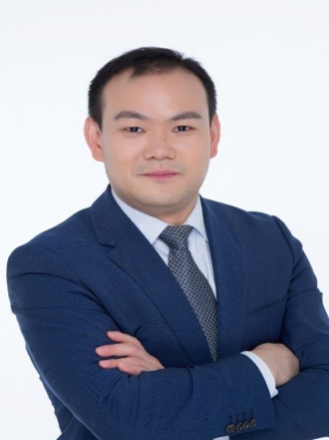
Jinjun
Chen
MAE
Fellow ,IEEE
Fellow, Chair for IEEE
TCSC
Swinburne University
of
Technology,
Australia
|
Title:
Composite DP: Bounded and Unbiased
Composite
Differential Privacy
Abstract:
The most kind of
traditional DP (Differential Privacy)
mechanisms
(e.g. Laplace, Gaussian, etc.) have
unlimited
output range. In real scenarios, most
datasets
have bounded output range, e.g. age [0-150].
Users would then need to use post-processing
or
truncated mechanisms to forcibly bound
output
distribution. However, these mechanisms
would
incur bias problem which has been a
long-known
DP challenge, resulting in various
unfairness
issues in subsequent applications. A
tremendous
amount of research has been done on
analyzing
this bias problem and its consequences, but
no
solutions can solve it fully.As the world
first
solution to solve this long-known DP bias
problem, this talk will present a new
innovative
DP mechanism named Composite DP. It will
first
illustrate this long-known bias problem, and
then detail the rational of the new
mechanism
and its example noise functions as well as
their
implementation algorithms. All source codes
are
publicly available on Github for any
deployment
or verification.
Biography:
Dr Jinjun Chen is a
Professor from Swinburne University of
Technology, Australia. He holds a PhD in
Information Technology from Swinburne
University
of Technology, Australia. His research
interests
include data privacy and security, cloud
computing, scalable data processing, data
systems and related various research topics.
His
research results have been published in more
than 300 papers in international journals
and
conferences. He received various awards such
as
IEEE TCSC Award for Excellence in Scalable
Computing and Australia’s Top Researchers.
He
has served as an Associate Editor for
various
journals such as ACM Computing Surveys, IEEE
TC,
TCC and TSUSC. He is a MAE (Academia
Europea)
and IEEE Fellow (IEEE Computer Society). He
is
Chair for IEEE TCSC (Technical Community for
Scalable Computing).
|
|
|
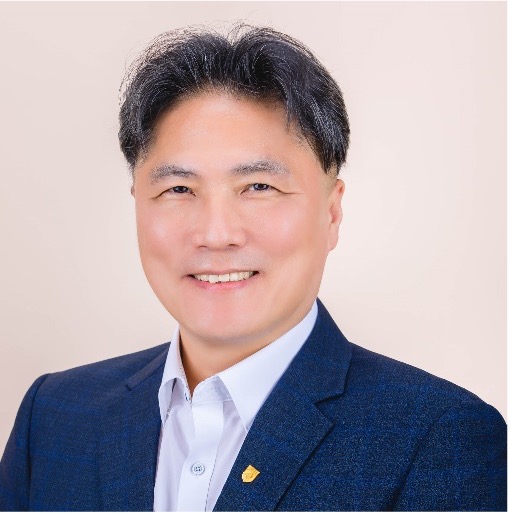
Minho Jo
Full Professor with
the Department of
Computer and Software
Engineering, Korea
University, South
Korea
|
Title:
A State Space Model for Solving the
Weaknesses of the Transformer
Abstract:
Prof. Minho Jo will
introduce a State Space Model (SSM) as an
alternative to the Transformer architecture,
addressing the limitations of the
Transformer in handling long sequences due
to their quadratic complexity computing and
high memory usage. His keynote talk
highlights the Mamba architecture as a
prominent SSM designed to overcome these
limitations. Mamba emphasizes its linear
complexity, efficient inference, and
handling of long sequences. Mamba is
competitive in performance while requiring
less memory.
In addition, Prof. Jo will present the
IoT.AI Lab’s (Prof. Jo’s Lab) recently
developed SSM and demonstrate its validation
through the prediction of autonomous vehicle
trajectories.
Biography:
Minho Jo (Senior
Member, IEEE) received the B.A. degree from
the Department of Industrial Engineering,
Chosun University, Gwangju, South Korea, in
1984, and the Ph.D. degree from the
Department of Industrial and Systems
Engineering, Lehigh University, Bethlehem,
PA, USA, in 1994. He is a Full Professor
with the Department of Computer and Software
Engineering, Korea University, Sejong, South
Korea, where he is the Director of the IoT &
AI Lab. Prof. Jo is currently the Director
of Brain Korea 21 [IoT Data Science Team]
sponsored by the Korean government. Prof.
Minho Jo is named in 2024, 2025 World’s TOP
2% Scientists List by Stanford University
and Elsevier. His current research interests
include IoT, generative LLM, quantum
computing and quantum AI,
blockchain/security, optimization theory,
and autonomous vehicles. The average number
of citations per publication authored by
Prof. Minho Jo (from 2015 through 2024) is
57.2 and the Average Field-Weighted Citation
Impact (FWCI) of Prof. Minho Jo (from 2015
through 2024) is 4.92 (based on SCOPUS
SciVal.)
Prof. Jo is a recipient of the 2018 IET Best
Paper Premium Award by the United Kingdom’s
Royal Institute of Engineering and
Technology. He was awarded with 2011 Headong
Outstanding Scholar Prize. He is one of the
founders of the Samsung Electronics LCD
Division. He is the Founder and the
Editor-in-Chief of KSII Transactions on
Internet and Information Systems (SCIE/JCR
and SCOPUS indexed.
https://itiis.org/board). He was the South
Korea’s Presidential Commission on Policy
Planning (Chair of AI and Big Data TF Team).
He served as an Associate Editor of IEEE
INTERNET OF THINGS JOURNAL, IEEE SYSTEMS
JOURNAL, IEEE ACCESS, Editor of IEEE
WIRELESS COMMUNICATIONS, and Editor of
NETWORK, respectively.
|